
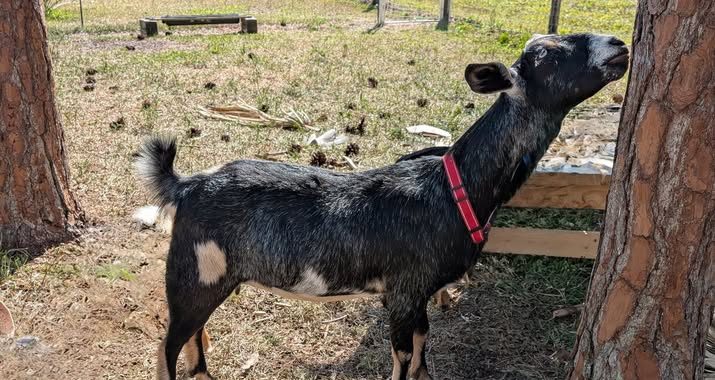
Assessing Goat Condition: A Practical Guide for New Goat Owners
Using the 5‑Point Goat Assessment to Decide When Intervention Is Needed
When you’re new to goats, it’s easy to panic the first time one looks a little thin, a little off, or just “not quite right.” Goats are expressive animals, but they’re also prey animals, which means they hide weakness until they can’t anymore. That’s why every goat owner should learn a simple, reliable way to assess a goat’s condition before reaching for medications, supplements, or dewormers.
Enter the 5‑Point Goat Assessment: a quick, hands‑on check that gives you a full picture of a goat’s health in just a few minutes. It’s also wise to keep a digital thermometer on hand for checking goats temps if you suspect any trouble.
Whether you’re evaluating a new goat, checking on a herd member who looks thin, or doing routine herd health, this method keeps you grounded in facts instead of guesswork.
1. Body Condition Score (BCS)
What you’re checking: How much fat and muscle the goat is carrying over the ribs, spine, and hips.
How to check:
- Run your hand along the spine
- Feel the ribs
- Check the hip bones
Healthy range:
- Dairy goats: 2.5–3.5
- Fiber/meat goats: 3–4
Red flags:
- Sharp spine
- Easily felt ribs
- Hollow flanks
- Sunken hips
A thin goat isn’t automatically a wormy goat — but it is a goat who needs a closer look.
How to Score a Goat (Hands-On Guide)
Step 1: Feel the spine
-
-
- Sharp like a ridge? → BCS 1–2
- Smooth but palpable? → BCS 3
- Hard to find? → BCS 4–5
-
Step 2: Check the ribs
-
-
- Easily felt with no pressure? → BCS 1–2
- Felt with light pressure? → BCS 3
- Difficult to feel? → BCS 4–5
-
Step 3: Evaluate the hips
-
-
- Sharp points? → BCS 1–2
- Rounded but defined? → BCS 3
- Soft and padded? → BCS 4–5
-
Step 4: Look at the topline
-
-
- Sunken? → BCS 1–2
- Level? → BCS 3
- Bulging? → BCS 4–5
-
2. FAMACHA Score
What you’re checking: The color of the lower eyelid to assess anemia, often caused by barber pole worms.
How to Perform a Correct FAMACHA Check (The Right Way)
Why “just pulling down the eyelid” gives false readings
Most new goat owners (and even some experienced ones) do FAMACHA wrong. If you simply pull down the lower eyelid, you expose the conjunctiva, not the palpebral mucous membrane — and that tissue is naturally lighter. That leads to false “pale” scores and unnecessary deworming.
Here’s the correct, vet‑approved method.
Step 1 — Restrain the goat calmly
You want:
-
-
- good light
- the goat’s head steady
- no shadows
-
Outdoors in indirect sunlight is ideal.
Step 2 — Use the “push–pull–pop” technique
This is the part most people skip, and it’s the whole reason FAMACHA gets misused.
1. PUSH
Place your thumb gently on the upper eyelid and push the eyeball slightly into the socket. This exposes the correct inner tissue.
2. PULL
Pull the lower eyelid down and away from the eye. You’re creating a pocket.
3. POP
Let the lower eyelid pop outward so the inner surface flips up and becomes fully visible.
This exposes the palpebral mucous membrane — the tissue the FAMACHA system is actually based on.
Step 3 — Compare immediately to a FAMACHA card
The color fades quickly once exposed to air and light, so compare within 1–2 seconds.
Healthy:
-
-
- Bright red
- Deep pink
-
Concerning:
-
-
- Light pink
- Pale
- White
-
Step 4 — Score both eyes
Always check both eyes. If they differ, use the paler score.
Step 5 — Interpret the score in context
FAMACHA only detects barber pole worm anemia. It does not diagnose:
-
-
- coccidia
- tapeworms
- nutritional anemia
- stress anemia
- mineral deficiencies
- dehydration
- weight loss from other causes
-
This is why FAMACHA must be paired with:
-
-
- Body Condition Score
- coat quality
- poop quality
- rumen fill
- behavior
-
A pale FAMACHA score + weight loss + poor coat = likely parasite load. A pale FAMACHA score + normal everything else = look deeper before treating.
Healthy:
-
-
- Bright pink to red
-
Concerning:
-
-
- Pale pink
- White
-
Important: Only treat based on FAMACHA if barber pole worms are the likely cause. Not all anemia is parasite‑related. To learn the proper method and get a score card, see this post specifically on FAMACHA scoring and free resources to learn it.
3. Coat & Skin Condition
What you’re checking: The goat’s “outer health” — because coat quality reflects internal health.
Healthy signs:
- Smooth coat
- No dandruff
- No bald patches
- No excessive scratching
Red flags:
- Rough coat
- Dandruff
- Hair loss
- Lice or mites
- Moisture scald
- Fungal patches
A poor coat can signal parasites, mineral imbalance, or nutritional gaps.
4. Poop Quality
What you’re checking: The shape and consistency of the pellets.
Healthy:
- Firm, separate pellets
Concerning:
- Clumps
- Dog‑log consistency
- Diarrhea
- Mucus
- Undigested grain
Poop tells you a lot about gut health, stress, parasites, and diet.
5. Hydration & Rumen Fill
What you’re checking: Whether the goat is drinking well and whether the rumen is functioning normally.
Hydration test:
- Pinch the skin on the neck
- It should snap back quickly
Rumen fill:
- Look at the left side behind the ribs
- A healthy goat has a gentle outward curve
- A sunken left side means poor rumen activity or not enough feed
Listen:
- You should hear gurgles and movement
- Silence is a red flag
Putting It All Together: When Does a Goat Need Deworming?
A goat needs deworming when multiple signs point toward parasite load — not just one.
Treat if you see:
- Low FAMACHA score
- Weight loss
- Poor coat
- Soft stool
- Bottle jaw
- Lethargy
Do NOT treat based on:
- “Looking thin” alone
- One bad poop
- Seasonal shedding
- Stress from moving homes
- Guessing
- Teme Lapse
Targeted treatment protects your goat — and prevents drug resistance in your herd. Deworming on a schedule actually just creates treatment resistant worms that cause your goats significantly more problems.
Why This Matters for New Goat Owners
Goats don’t come with warning lights. Learning to read their bodies is the closest thing we have.
The 5‑Point Assessment gives you:
- Confidence
- Clarity
- A repeatable system
- A way to catch problems early
- A way to avoid unnecessary medications
And most importantly: it helps you understand your goats as individuals.
Final Thoughts
If you’re new to goats, don’t be afraid to ask for help, experienced goat owners love sharing what they’ve learned. The more you practice the 5‑Point Assessment, the faster you’ll be able to spot subtle changes before they become big problems.
Today’s “thin goat check” becomes tomorrow’s confidence.
And every goat you learn to read makes you a better steward of your herd.
