
The Farmhouse Cheesecake I Didn’t Know I Needed
Every season on the farm has its own rhythm. Right now, ours sounds like the steady hum of the milking stand, the soft clink of jars in the fridge, and the unmistakable honk of Pilgrim geese announcing that egg season has officially begun.
And when the goats are generous and the geese are overachievers, there’s only one reasonable thing to do:
Make cheesecake.
Not just any cheesecake, though! A farmhouse chèvre cheesecake built from the milk and eggs that come from right outside my door (literally).
This is how I got here, what I learned, and the recipe that now lives permanently in my “make this again” folder.
The Cheese
I’ve been working on goat cheddar for a week now, just batch after of batch of challenges. I don’t quit until I master whatever I’m trying to do, but I do sometimes take a break. Today I was looking at 2 gallons of fresh goat milk and the thought of another long night waiting for curds to behave enough to start cheddaring felt like pain, so I shifted to my favorite fall back, Chèvre. I had a kit in the freezer ready to go so why not?
Making Mistakes: At one point, while heating the milk to 86F to add the culture, I walked away from the pot for ‘just a second’ and came back to find my milk at 150°F. For a heartbeat I thought I’d ruined everything, but here’s the secret: a brief spike like that doesn’t wreck chèvre. It just means you treat the milk like it’s lightly pasteurized (add some calcium chloride) and keep going. The cheese survived and so did I.
The Chèvre Question: One Packet or Two?
If you’ve ever used the chèvre packets from New England Cheesemaking, you’ve probably noticed the conflicting advice:
- The package says: 1 packet per gallon
- Experienced cheesemakers whisper: 1 packet for 2 gallons
Here’s the truth I landed on after a lot of reading, a lot of stirring, and a lot of curd‑watching:
Fresh raw (or even lightly pasteurized) goat milk doesn’t need that much culture.
It’s already lively, balanced, and ready to set beautifully with a gentle touch. So for my 2‑gallon batch of fresh milk, I used:
One packet for the full 2 gallons.
The result was a slow, silky set and a curd that drained into the creamiest chèvre I’ve ever made, closer to cream cheese than the crumbly chèvre you find in stores.
Exactly what I needed for cheesecake.
Turning Chèvre Into Cream Cheese
To get that classic cream‑cheese texture, I drained the chèvre for 4–6 hours, just until it was glossy and spreadable. Then I added a splash of heavy cream to round out the fat content.
At this point, I realized something important:
This chèvre isn’t a substitute for cream cheese. It’s an upgrade. It’s lighter, fresher, and somehow both richer and brighter at the same time.
Enter the Goose Eggs
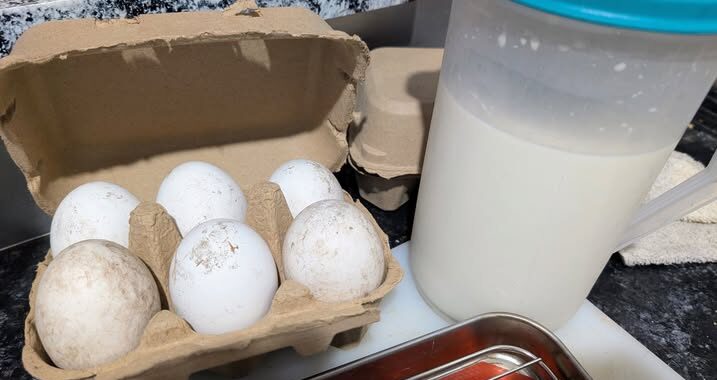
If you’ve never baked with goose eggs, imagine a chicken egg that went to art school and came back with opinions. They’re huge and perfect for custards.
One goose egg equal about two chicken eggs, which means for a standard cheesecake that calls for four eggs, you only need:
Two goose eggs.
The yolks add silk. The whites add structure. The whole thing becomes a dreamy custard that practically sighs when you cut into it.
The Farmhouse Chèvre Cheesecake Recipe
Crust
- 1½ cups graham cracker crumbs
- 2 tablespoons sugar
- 6 tablespoons melted butter
- Pinch of salt
Filling
- 32 oz of your cream‑cheese‑texture chèvre
- ½ cup heavy cream
- 1 cup sugar
- 2 goose eggs (or 4 chicken eggs)
- 1 tablespoon lemon juice
- 2 teaspoons vanilla
- ¼ teaspoon salt
Instructions
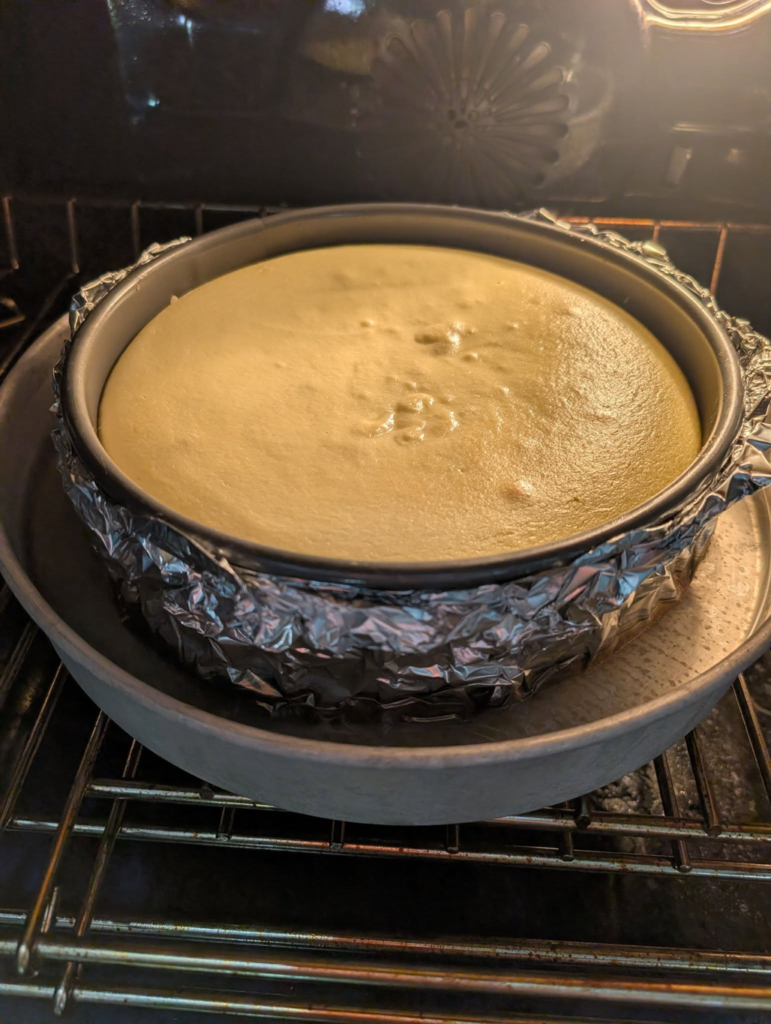
- Heat oven to 315°F. Line and wrap your springform pan.
- Mix crust ingredients, press into pan, bake 8 minutes.
- Beat chèvre until smooth. Add sugar. Add cream.
- Add goose eggs one at a time, mixing gently.
- Add lemon, vanilla, salt.
- Bake in a water bath for 55–70 minutes, until the center jiggles softly.
- Cool slowly. Chill overnight.
- Slice, serve, and try not to eat it all in one sitting.
Variations Straight From the Farm
- Honey Chèvre Cheesecake: Add ¼ cup honey, reduce sugar to ¾ cup.
- Lemon Bright: Add zest of two lemons and extra juice.
- Savory Herb Cheesecake: Reduce sugar, add chives and dill, perfect for a cheese board.
- Chocolate Swirl: Melt dark chocolate and marble it through the batter.
What to Do When the Geese Won’t Stop Laying
Freeze the eggs. Seriously.
Crack, beat lightly, add a pinch of salt, freeze in silicone molds. They thaw beautifully and bake like fresh.
Why This Recipe Matters to Me
There’s something grounding about making a dessert that’s not just homemade, but home-grown. A cheesecake that starts with goats you feed every morning and geese who patrol the yard like feathered security guards.
